








Are Printed Rolling Papers Safe to Smoke?
Posted by DaySavers Team on Apr 23rd 2026
The cannabis industry has officially taken hold in the U.S., with daily marijuana use now more common than daily alcohol consumption, greatly expanding the market’s consumer base. And whether you’re a first-time smoker or a seasoned daily consumer, chances are you’ve never questioned the safety of your rolling paper.
And why would you? Consumers should expect that their smokables have passed some sort of safety testing, but the fact remains that while the flower inside your pre-rolls have been tested to meet state safety standards, smoking accessories – most notably rolling papers and wraps – are not required to go through the same rigorous testing as the flower you’ll consume in most states.
That fact alone should create pause for joint and blunt smokers, and with the addition of combustion, who knows what you’ll be pulling into your lungs. That’s why all DaySavers products, including papers, wraps, cones and blunts, are all tested to the same standards as flower, ensuring the safest possible smoke without fears of contaminants like heavy metals, pesticides and microbials creeping into your sesh.
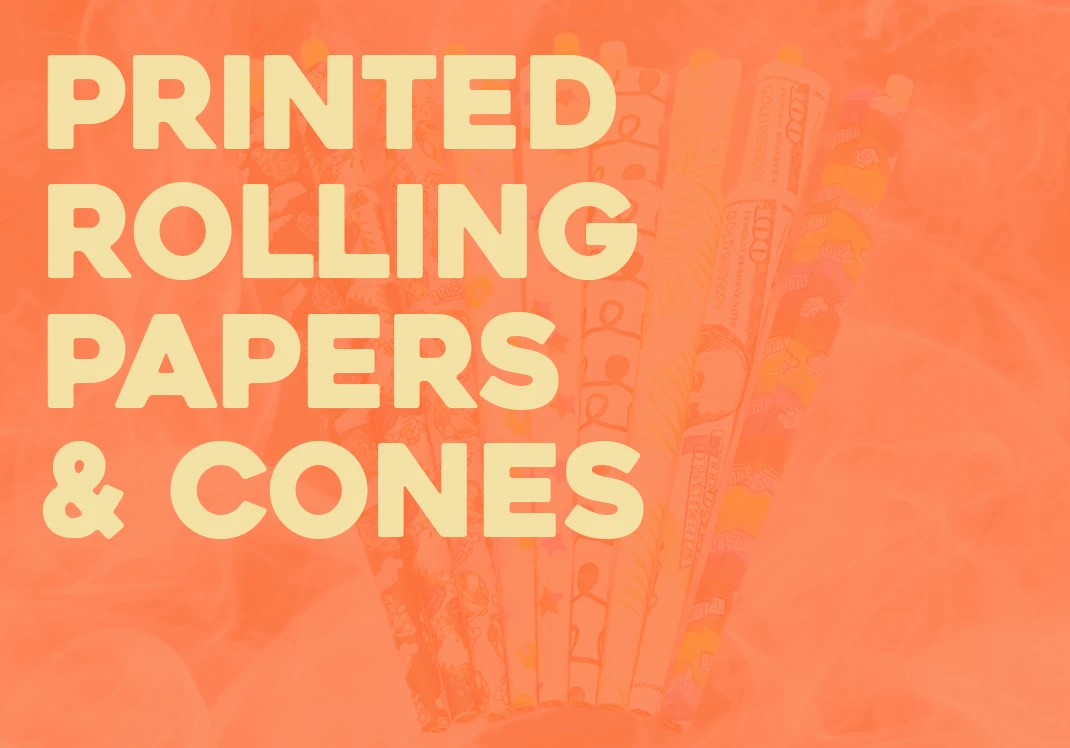
Those dangers are exacerbated by the introduction of printed rolling papers, which use “food-grade ink” such as soy to create unique, eye-catching designs like leopard print, $100 bills or the ever popular flavored and printed papers offered by Juicy Jay’s. But again, rolling papers and wraps are not subject to testing, so the addition of ink adds one more variable to mix and may create additional safety concerns.
So today, let’s focus on the safety of printed rolling papers. Are printed rolling papers safe to smoke? What happens to the printed rolling papers after they have been ignited?
You have questions; the DaySavers have answers.
What Are Printed Rolling Paper?
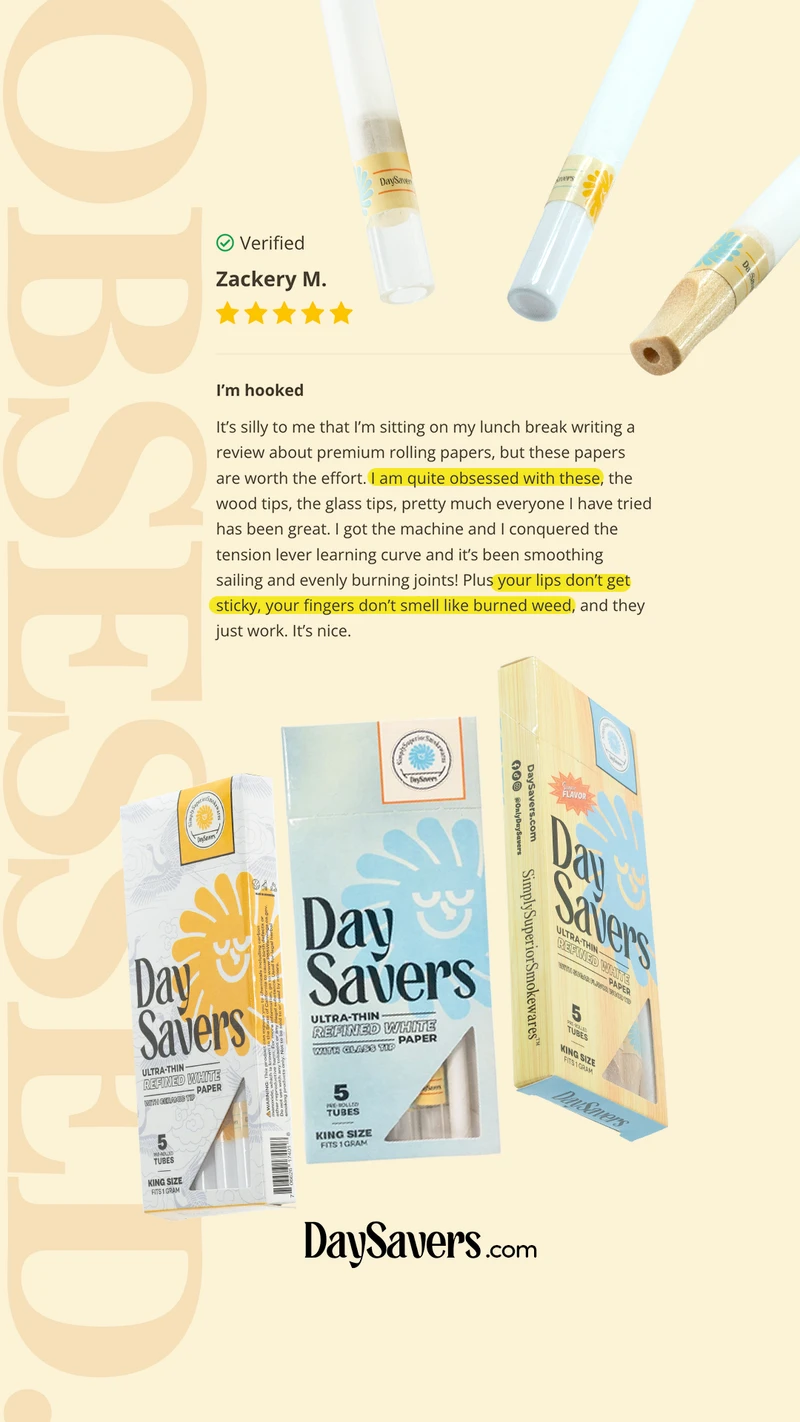
Simply put, printed rolling papers are cones and papers – often used with refined white paper – that have designs printed directly on the rolling paper, adding style and personality to any pre-roll sesh. More often than not, food-grade, soy-based inks are employed to create these designs.
And that sounds safe, right? “Food-grade.” “Soy-based.” But the name sounds a little less safe when you know that other elements have been added to the ink. And independent research and tests show that heavy metals are sometimes what is added.
But again; “food safe,” right? But you are not eating your rolling papers you are smoking them, and combustion may alter how these elements interact in the body. Unlike ingesting heavy metals through food, which passes through the digestive system and get filtered out, inhalation provides a direct pathway to the bloodstream, increasing the potential risk.
That distinction matters because inhalation and ingestion are two very different things. Something considered acceptable to eat may behave very differently once burned and inhaled into the lungs. Consumers often hear these terms like “food-grade ink,” but food safety does not automatically mean smoke safety.
Darwin Millard, a prominent figure working with ASTM International to develop voluntary industry standards, questions the safety standards of rolling papers, stating that just because something is “food-grade,” does not mean it is an “inhalation-grade” material. He also states that the real question is what you inhale with these products, and how much are you inhaling.
And with the addition of soy-based inks found to have high levels of heavy metals – including copper, chromium and vanadium – the safety of inhalation becomes a real focus of concern.
Are Printed Rolling Papers Safe to Smoke?
Research on printed rolling papers by Lake Superior State University led by Dr. Derek Wright – Professor of Environmental Sciences and facilities coordinator of the MASC Lab and ICP-MS facility - found that consumers could be unknowingly exposing themselves to unsafe levels of metal contaminants. Copper-based pigments are used by a number of manufacturers, and that regular use of these products may result in exposures as high as 4.5-11 times the maximum exposure limits for humans.
Researchers compared their findings against pharmaceutical inhalation safety references used for products meant to be inhaled into the lungs. The study analyzed commercially available rolling papers using what’s called an ICP-MS (Inductively Coupled Plasma Mass Spectrometry), a highly sensitive process that detects trace metals at very small levels.
One interesting finding was that excessive levels of copper were primarily found in blue, green and purple pigments, which is troubling as people would not naturally assume that actual copper contributes to the color. Many consumers likely assume bright colors are harmless and cosmetic, but pigments often require additional materials to be added to create certain shades, meaning the color itself is the primary concern.
In many cases, these products are sold for shelf appeal and novelty value, rather than for providing a cleaner smoking experience.
Dr. Riley Kirk, a cannabis chemist at the Cannabis Research Center & Coalition says, “If you’re going to stay away from some printed paper, stay away from those three colors.”
And even if your state requires testing of pre-rolls in their final form – like in California and Michigan, for example – those tests would not necessarily have the same results if the product was combusted first.
Because as Dr. Markus Roggen, a respected cannabis chemist, tells us, there are chemical reactions happening when you light and inhale something, so the joint changes when you smoke it. He uses the example of THCa converting to THC upon combustion as one chemical reaction we already know is happening. What does that mean for the rest of the material being combusted?
For this reason, Dr. Roggen says that products should be tested as they are consumed, not just as they lay on a table, and the potential for heavy metals in “food grade” ink is the perfect example why.
Overall, the findings of the LSSU study underscore the importance of reassessing the materials used in rolling papers for the good of consumers and the industry at large.
Should Joint Smokers Avoid Printed Rolling Papers & Cones?
For consumers who enjoy joints and pre-rolled cones, the safest move is choosing clean, unprinted papers with transparent lab testing results, rather than novelty products that rely on colors, decorative inks and metallic finishes.
The team at LSSU emphasizes that further testing is required to measure the actual levels of toxins in smoke due to combustion. The lungs lack the natural filtrations systems that the digestive system has, and due to the high levels of heavy metals in soy-based inks pre-combustion, the safety of inhaling these inks post-combustion can’t be taken lightly.
In fact, after the results of this study were released, Custom Cones USA – the parent company of DaySavers – removed all printed cones and papers from their catalog. CEO Harrison Bard explained the logic behind this decision.
“It’s not definitive that once you combust these printed paper products, that it’s harmful, or to what degree it’s harmful, but knowledge of the potential risks requires us to take action,” he said. “If something is potentially harmful, just don’t do it.”
High-quality smokeware brands like DaySavers provide QR codes and online access to heavy metal, pesticide and microbial test results so consumers can verify what they are smoking. Because as product transparency grows within the smoking accessories market, consumers will increasingly expect proof over promises.
Consumer safety should be the top priority across the cannabis industry, and as brands and consumers we should follow the science.
And in the case of printed rolling papers and cones, the science says stay away.
When it comes to smoking accessories, clean and tested is the smartest choice you can make to Enjoy Your Day, Your Way.
Novelty printed papers? Nope. The safest move is choosing clean, unprinted papers with transparent lab testing results.